Lake Tahoe is one of the most desirable mountain and lake communities in the United States, and its real estate prices reflect that demand. Buyers are competing for homes in a market where geography, environmental protections, limited development, high construction costs, second-home ownership, and a desirable year-round lifestyle all restrict supply or increase demand.
So why is Lake Tahoe real estate so expensive? There is no single reason. Tahoe is a good example of what happens when strong housing demand meets a supply of homes and buildable land that cannot easily be developed.
Key Takeaways
• Lake Tahoe has a limited supply of privately owned and developable land. The U.S. Forest Service manages approximately 78% of the land within the Lake Tahoe Basin
• Tahoe's mountains, steep slopes, environmentally sensitive land, and Lake Tahoe itself further reduce the amount of land suitable for residential development
• TRPA's growth management system regulates new development and limits the pace at which additional residential units can be created
• Second homes consume a large share of the region's housing supply where an analysis found that approximately 65% of Tahoe-Truckee housing is held for seasonal or occasional use
• Building a home in Tahoe can cost considerably more than building in many lower-elevation markets because of labor shortages, mountain construction conditions, transportation costs, snow, site preparation, permitting, and environmental requirements
• Nevada communities such as Incline Village, Crystal Bay, Glenbrook, and Zephyr Cove can attract additional demand from buyers interested in Nevada's favorable tax structure
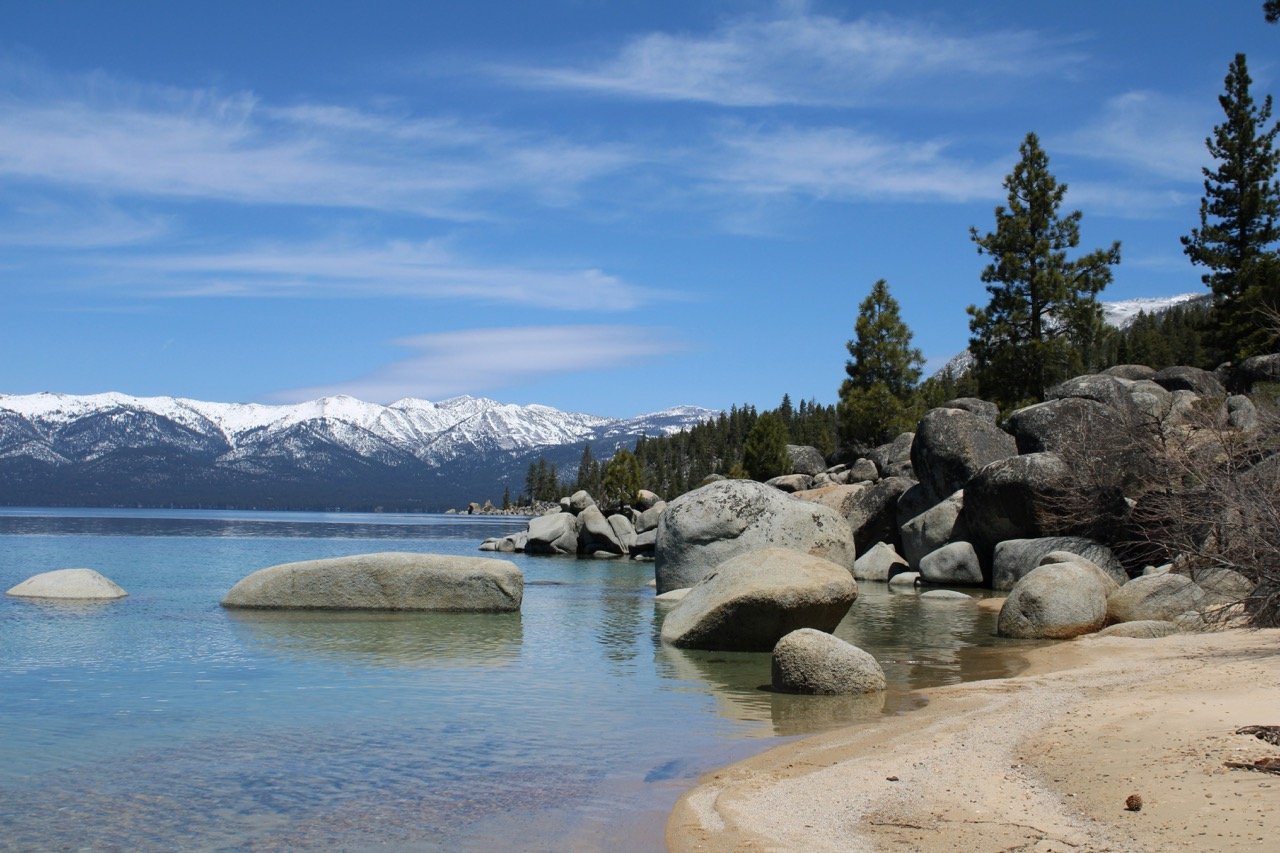
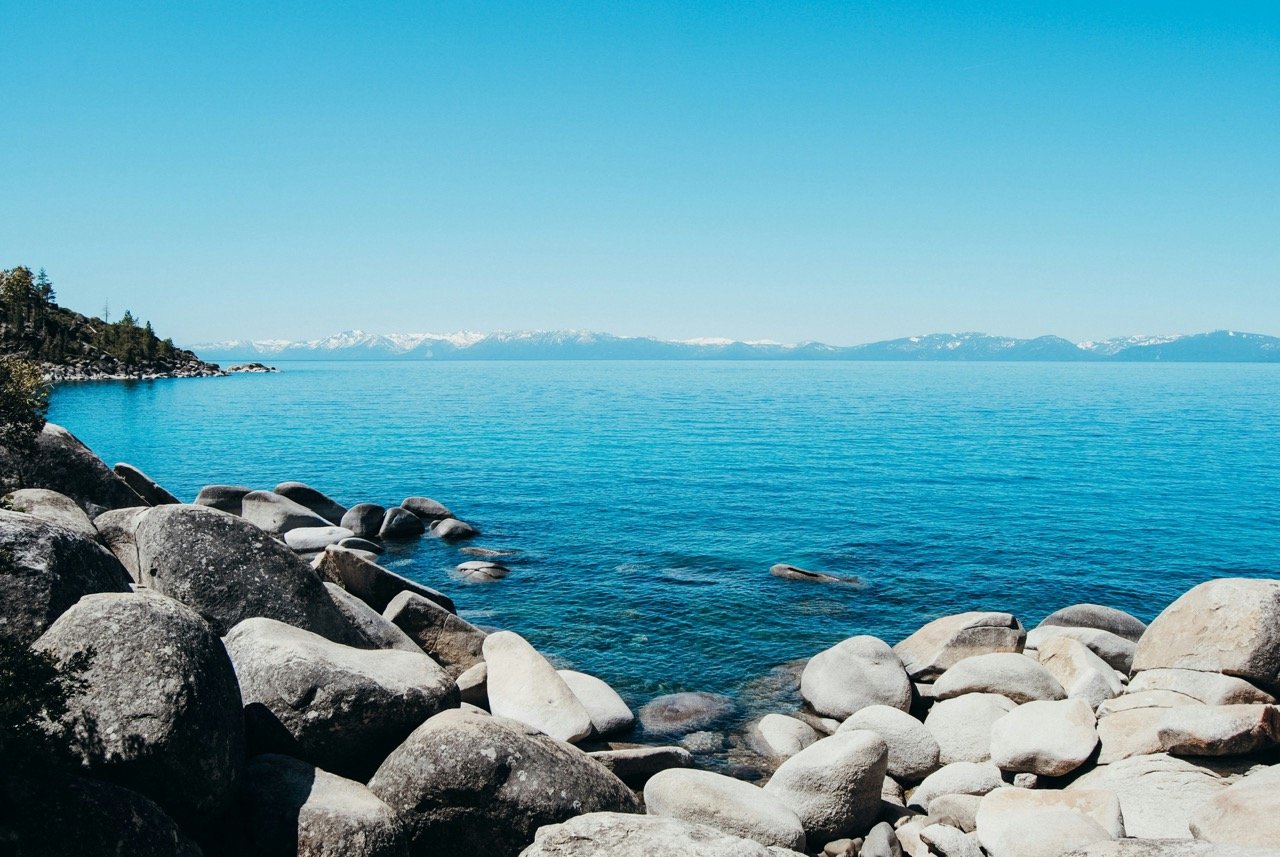
• Lake Tahoe offers something that cannot be manufactured elsewhere: a limited amount of property surrounding a world-famous alpine lake with access to skiing, boating, beaches, hiking, golf, and year-round recreation
Lake Tahoe Has a Limited Supply of Land
The biggest reason Lake Tahoe real estate is expensive starts with basic economics. There is only so much land to build on. The Lake Tahoe Basin covers approximately 506 square miles, but Lake Tahoe itself occupies about 192 square miles. Much of the remaining land consists of mountains, forests, environmentally sensitive areas, public land, and steep terrain.
The U.S. Forest Service manages approximately 78% of all land within the Lake Tahoe Basin, totaling more than 154,000 acres. That leaves a relatively small percentage of the basin available for private development. When the supply of something is limited and demand remains high, buyers compete for what is available and that puts upward pressure on property values.
Tahoe's Terrain Make Development Difficult
Steep slopes can require more complicated foundations, retaining walls, drainage systems, erosion controls, excavation, engineering, and specialized equipment. A relatively simple building site in another market may become a major engineering project in Tahoe. In addition, TRPA regulations restrict new land coverage and permanent disturbance on environmentally sensitive land. As a result, two lots of similar size can have very different development potential.
New Home Supply is Growing Slowly
Tahoe cannot easily build its way out of high housing demand. TRPA's housing forecasts show how slowly new supply has historically entered the market. From 2018 through 2024, multifamily housing construction within the Tahoe basin averaged only about 22 units per year. Current forecasts have also assumed roughly 70 new single-family homes per year. This means most buyers are competing primarily for an existing home rather than a rapidly expanding supply of new homes.
High Second Home Ownership Limits Housing Inventory
According to housing research released by the Tahoe Truckee Community Foundation and TRPA in 2026, approximately 65% of Tahoe-Truckee homes here are held for seasonal or occasional use. Separate Tahoe Basin data has also shown that seasonal or recreational homes accounted for almost half of the basin's housing inventory as of 2020. TRPA has specifically identified constrained housing supply combined with strong second-home demand as a factor creating a highly competitive housing market.
Building a Home in Lake Tahoe Is Expensive
High construction costs help establish a floor for the value of Tahoe's housing inventory. If replacing or building a comparable home is expensive, existing homes become more valuable as well. Tahoe construction has several cost pressures:
• Limited skilled labor
• High local housing costs for workers
• Mountain transportation and material delivery
• Shorter or weather-dependent construction seasons
• Snow loads and mountain building requirements
• Difficult excavation and steep lots
• Retaining walls and complex foundations
• Environmental and erosion-control requirements
• Permitting and design costs
• High-end finishes common in the luxury market
Local reporting on the Tahoe-Truckee construction industry found that some contractors said building costs had nearly doubled compared with 2019. The same reporting identified the shortage of available construction labor and the high cost of living for workers as major contributors to rising costs.
Buyer Demand Extends Well Beyond Lake Tahoe
Lake Tahoe competes for buyers from major wealth centers in California, Nevada, and across the country. A second-home buyer from the Bay Area, Sacramento, Southern California, or another major metropolitan area may evaluate a Tahoe home based on lifestyle and long-term ownership goals rather than local wages. This creates a housing market where a majority of purchasing power can come from outside the local economy.
The Lake Tahoe Lifestyle Creates Constant Demand
Lake Tahoe offers four-season recreation in a relatively compact geographic area. Residents can have access to skiing and snowboarding, boating, paddle-boarding, beaches, hiking, mountain biking, golf, fishing, restaurants, resorts, and outdoor recreation.
The region is also accessible from major Northern California population centers and the Reno-Tahoe International Airport. There might be hundreds of homes for sale around Tahoe, but only a small number may offer the exact combination of location, view, condition, privacy, and amenities a specific buyer wants.
Nevada's Tax Advantages Attracts More Buyers
One reason communities like Incline Village and Crystal Bay on the Nevada side of Lake Tahoe can command particularly higher prices is because of Nevada's favorable tax structure. That additional demand competes for an already limited supply of Nevada-side Tahoe real estate. For high-income buyers considering a primary residence, this can make Nevada especially attractive compared with California.
Tax circumstances vary substantially by buyer, residency status, income source, property use, and other factors. Buyers considering a move between California and Nevada should discuss their individual situation with a qualified CPA or tax professional.
Is Lake Tahoe Real Estate Worth the Price?
That depends on what your goals are. Lake Tahoe buyers are paying for more than just square footage. They are paying for location, land, access to the lake and mountains, recreational opportunities, privacy, views, and community amenities. From an investment standpoint, scarcity does not guarantee that prices will always increase. Real estate markets still move through cycles, and interest rates, economic conditions, insurance costs, inventory, and buyer demand can all affect values.
What makes Tahoe unusual is that many of the constraints on housing supply are structural rather than temporary. The mountains are not getting flatter. The lake is not getting larger. Public forest land is not suddenly becoming suburban development. Environmental protections remain a central part of planning within the basin. Those factors help explain why Lake Tahoe real estate can remain expensive even when the broader housing market slows.
Buying or Selling Real Estate in Lake Tahoe?
Lake Tahoe is not one real estate market. Incline Village, Crystal Bay, Truckee, Tahoe City, Kings Beach, the West Shore, East Shore, and South Lake Tahoe each have different inventory, pricing, regulations, amenities, and buyer profiles. If you are considering buying or selling a home in Incline Village or anywhere around Lake Tahoe, working with a local real estate professional can help you understand how these factors affect the value of a specific property and neighborhood.
As a Lake Tahoe real estate agent specializing in Incline Village and the surrounding Tahoe market, I can help you compare communities, evaluate properties, and understand current market conditions. Let's connect so we can help find the right place for you.
Frequently Asked Questions
Why are houses in Lake Tahoe so expensive?
Lake Tahoe combines high buyer demand with limited housing supply. Public land ownership, mountains, environmental restrictions, development limits, second-home ownership, high construction costs, and limited skilled labor all restrict how quickly new housing can be added.
How much does a home in Lake Tahoe cost?
Prices vary considerably by community and property type. In Q3 2026, median sale prices were approximately $1.47 million in Incline Village and Crystal Bay, $1.20 million on the North and West Shores, $1.32 million in Truckee, Northstar, and Olympic Valley, and $718,000 on the South Shore.
Why is Incline Village real estate so expensive?
Incline Village combines limited housing inventory with beaches, golf courses, recreation, Nevada residency advantages, lake access, and strong demand from luxury and second-home buyers. Nevada's lack of an individual state income tax can also increase its appeal to certain high-income buyers.
Is it expensive to build a house in Lake Tahoe?
YES — Tahoe construction can involve expensive labor, difficult terrain, excavation, snow-related requirements, specialized foundations, environmental regulations, development rights, permitting, transportation costs, and a limited construction workforce.
Why can't developers simply build more homes around Lake Tahoe?
Much of the basin is public land or mountainous terrain, while private development is subject to environmental and growth-management regulations. The U.S. Forest Service alone manages approximately 78% of land within the Lake Tahoe Basin.
Do second homes make Lake Tahoe real estate more expensive?
They contribute to the supply-demand imbalance. A 2025 regional housing study found that approximately 65% of Tahoe-Truckee housing is held for seasonal and occasional use. This reduces the portion of the existing housing inventory available to full-time residents.
Is the Nevada side of Lake Tahoe more desirable because of taxes?
Taxes can be an important factor for certain buyers. Nevada does not impose an individual state income tax, which can make communities such as Incline Village and Crystal Bay attractive to some high-income buyers considering Nevada residency. Individual tax circumstances vary, so buyers should speak with a qualified tax professional before making residency decisions.