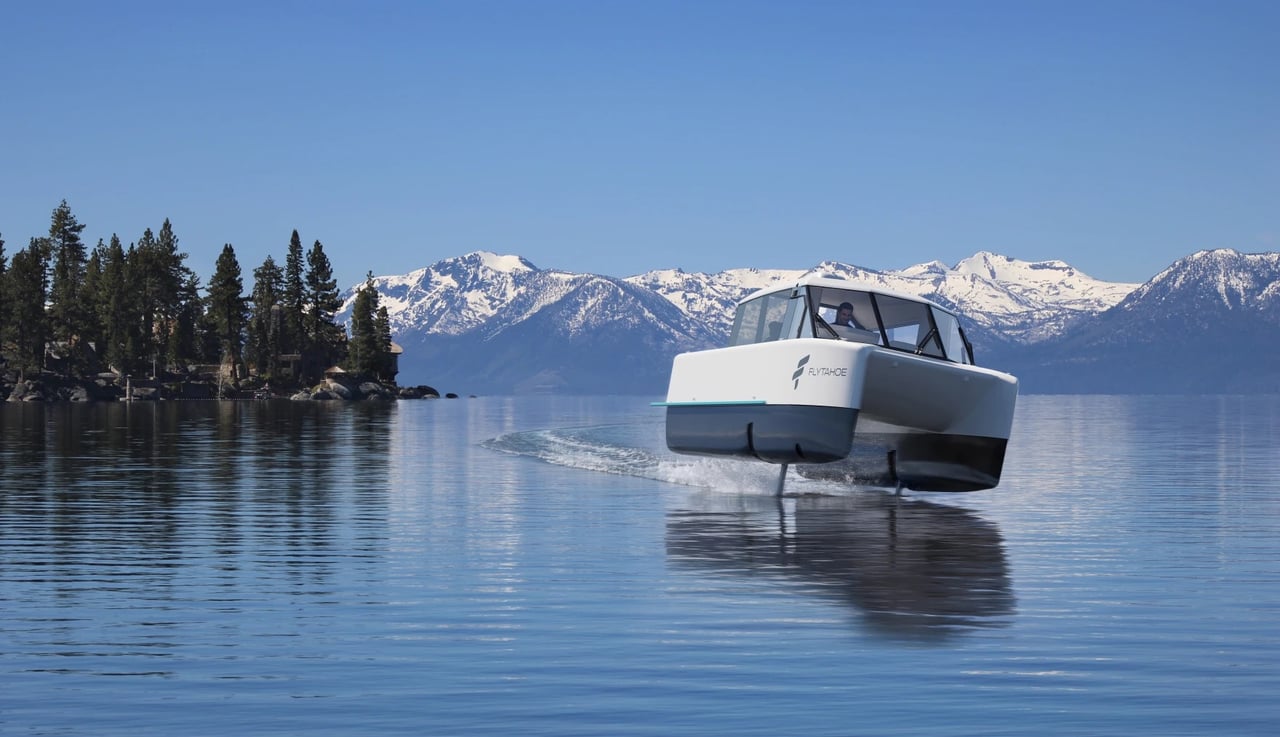
Getting around Lake Tahoe could become much easier in the next few years. FlyTahoe, a transportation company developing an electric ferry network, is working toward launching passenger service across Lake Tahoe in 2028. The proposed system would use electric hydrofoil boats that travel above the water, potentially reducing the trip between North and South Lake Tahoe to approximately 30 minutes.
Key Takeaways
- FlyTahoe is targeting 2028 for its proposed electric ferry service, although the project still requires regulatory approval
- The company hopes to reduce North Shore to South Shore travel times to approximately 30 minutes, compared with drives that often take 60 to 90 minutes or longer
- The proposed fleet includes 10-passenger Vessev VS-9 hydrofoils and larger 30-passenger Candela P-12 ferries
- Electric hydrofoil technology reduces energy consumption, noise, and wake compared with conventional boats
- FlyTahoe could make commuting, skiing, dining, and exploring different Lake Tahoe communities more convenient
What Is FlyTahoe?
FlyTahoe is a proposed electric water transportation service founded by Ryan Meinzer. The company's goal is to connect communities around Lake Tahoe through a network of electric passenger ferries. Instead of relying entirely on the roads surrounding the lake, passengers could travel directly across the water.
The concept addresses one of Lake Tahoe's longstanding transportation challenges. Although many communities are relatively close together geographically, driving between them can take considerable time because of the lake's size, mountain terrain, limited road network, and seasonal traffic.
FlyTahoe plans to use a combination of larger ferries for established routes and smaller vessels for more flexible transportation options. The company demonstrated its electric hydrofoil technology on Lake Tahoe in October 2026 and is continuing to develop the infrastructure and regulatory approvals needed for commercial service.
How Do FlyTahoe's Electric Hydrofoil Boats Work?
Unlike conventional boats that move through the water, hydrofoil vessels use underwater wings to lift much of the boat's hull above the surface as they gain speed. This reduces water resistance which allows the vessels to travel efficiently while using less energy. According to FlyTahoe and its manufacturing partners, hydrofoil technology can reduce energy consumption by roughly 80% compared with conventional vessel designs.
FlyTahoe is working with two manufacturers that offer different passenger capacities. Both vessels use electric propulsion rather than conventional gasoline or diesel engines. Their hydrofoil designs also produce very little wake, helping limit shoreline disturbance:
Vessev VS-9
The smaller vessel accommodates up to 10 passengers and travels at approximately 25 knots, or 29 mph. Its enclosed cabin, panoramic windows, and quiet electric propulsion could suit smaller groups and flexible routes.
Candela P-12
The larger ferry accommodates up to 30 passengers with space for personal belongings such as bicycles, skis, and snowboards. It is intended to support higher-capacity passenger service between major destinations.
When Will FlyTahoe Begin Operating on Lake Tahoe?
FlyTahoe is currently targeting 2028 for its initial passenger service. The company has already conducted demonstrations of its smaller Vessev VS-9 vessel and plans to continue testing and development through 2027. Its first U.S.-manufactured fleet vessel is expected in early 2028.
Before passengers can purchase tickets, FlyTahoe must complete several important steps, including regulatory permitting, vessel certification, docking arrangements, and transportation connections. As of November 2026, FlyTahoe has not launched commercial passenger operations and a confirmed opening date has not been announced.
Where Will FlyTahoe Operate?
FlyTahoe's primary objective is to connect North Lake Tahoe and South Lake Tahoe through a direct ferry route. The initial concept focuses on travel between the Tahoe City area and the South Shore, with the possibility of expanding service to additional locations.
Communities that have been discussed in FlyTahoe's broader transportation plans include Tahoe City, Homewood, Kings Beach, Tahoe Vista, and areas near South Lake Tahoe. These are potential service areas, not a confirmed list of passenger terminals. Final routes and boarding locations will depend on permits, marina agreements, and operating arrangements.
How Much Time Could FlyTahoe Save?
One of the biggest advantages of FlyTahoe's proposed electric ferry service is the potential reduction in travel time between North and South Lake Tahoe. Currently, driving between the two areas typically takes 60 to 90 minutes or longer depending on traffic, weather, and road conditions. FlyTahoe aims to reduce that journey to approximately 30 minutes potentially saving passengers 30 to 60 minutes or more each way.
For residents who frequently travel between North and South Lake Tahoe, these time savings could make a significant difference throughout the year. Whether commuting for work, visiting friends, skiing at different resorts, or enjoying restaurants and entertainment on the opposite side of the lake, the ferry could make traveling around Lake Tahoe much more convenient.
How Could FlyTahoe Benefit Lake Tahoe Residents?
1. Less Time Spent in Traffic
Traffic is one of the more frustrating aspects of living in Lake Tahoe particularly during busy summer weekends, holidays, and winter ski season. Highway 28, Highway 89, and Highway 50 serve as major transportation corridors around the lake. During peak travel periods, congestion can significantly increase travel times.
FlyTahoe could provide an alternative for residents who would otherwise drive around the lake. If enough passengers choose ferry transportation over driving, the service could also help reduce vehicle traffic on surrounding roads.
2. Easier Access to Ski Resorts
Lake Tahoe is home to numerous ski resorts, but visiting a resort on the opposite side of the lake often requires a lengthy drive.
For example, someone living near Tahoe City might want to spend the day skiing at Heavenly Mountain Resort in South Lake Tahoe. Rather than driving around the lake, a ferry could offer a faster way to reach the South Shore, followed by a local shuttle or other transportation connection to the resort.
The proposed vessels can accommodate equipment such as skis and snowboards, making the service particularly relevant to winter recreation.
3. More Convenient Dining and Entertainment
Lake Tahoe has restaurants, entertainment venues, beaches, and recreational opportunities spread across several different communities.
A resident in North Lake Tahoe might want to attend a concert in Stateline or enjoy dinner in South Lake Tahoe without committing to a long round-trip drive. Similarly, South Shore residents could have easier access to North Shore restaurants, shopping, and recreational activities.
This could encourage residents to explore more of the lake rather than limiting their activities to nearby neighborhoods.
4. Better Transportation for Local Workers
FlyTahoe could also benefit employees who live and work in different parts of Lake Tahoe. Housing costs can make it difficult for workers to live close to their jobs. Some employees commute between communities to reach hotels, restaurants, ski resorts, casinos, and other businesses. A reliable ferry could give these workers another commuting option.
FlyTahoe has discussed pricing strategies intended to make the service affordable for local workers, potentially including discounted commuter fares.
5. Reduced Environmental Impact
Protecting Lake Tahoe's water clarity is a major priority for the region. Vehicle traffic contributes pollutants and fine sediment that can enter the lake through stormwater runoff. Reducing vehicle miles traveled could help address some of these impacts.
FlyTahoe's proposed electric ferries offer several potential environmental advantages including:
- Zero direct exhaust emissions during electric operation.
- Reduced wake that can limit shoreline disturbance.
- Lower operating noise compared with conventional motorboats.
- Less energy consumption through hydrofoil technology.
- Potential reductions in automobile trips around the lake.
The project has been recognized in regional transportation planning as a possible way to support more sustainable travel. Its actual environmental benefits will depend on ridership, displaced vehicle trips, electricity sources, and operating conditions.
FlyTahoe Is Already Building Charging Infrastructure
One of the project's most significant recent developments occurred in November 2026, when FlyTahoe announced the installation of new electrical infrastructure at Tahoe Keys Marina in South Lake Tahoe. The installation includes a marine power pedestal designed to support fast charging for electric boats.
FlyTahoe has also identified charging infrastructure at Tahoe City Marina and Homewood High & Dry Marina. These improvements are important because electric ferry operations require dependable charging facilities at strategic locations around the lake.
Although charging infrastructure does not guarantee that commercial operations will begin in 2028, it represents progress toward making the proposed network operational.
How Much Will FlyTahoe Tickets Cost?
FlyTahoe has not announced a final public ticket pricing schedule. Earlier planning proposals discussed fares around $50 per trip, with a potential discounted $20 commuter fare during designated morning and evening periods.
Those figures appeared in a 2026 workforce transportation funding proposal and should not be considered confirmed ticket prices. The company's broader goal is to balance visitor pricing with affordable transportation for local residents and workers.
What Could FlyTahoe Mean for Lake Tahoe Real Estate?
For buyers considering purchasing a home in Lake Tahoe, transportation and accessibility are important factors. Although FlyTahoe is still in development, the proposed ferry system could eventually influence how buyers evaluate different communities around the lake.
More Flexibility When Choosing Where to Live
Today, many buyers prioritize properties close to the places they visit most frequently. Someone who enjoys skiing at Heavenly or spending time in South Lake Tahoe might prefer purchasing on the South Shore to avoid long drives. If FlyTahoe provides reliable connections between communities, buyers could have more flexibility in choosing where to live.
Greater Appeal for Second-Home Buyers
Many Lake Tahoe properties serve as vacation homes or second residences. These buyers often prioritize convenience because they may only spend weekends or short periods at their properties. A ferry system that reduces travel time could make it easier to enjoy more of the lake during those visits.
Could FlyTahoe Increase Lake Tahoe Property Values?
Improved transportation infrastructure can make certain locations more desirable, especially when it provides meaningful access to jobs, recreation, and services. Properties within easy reach of established ferry connections might attract interest from buyers who value transportation flexibility.
Any future effect would depend on the success of the service, passenger demand, pricing, terminal locations, and how frequently residents use it. Buyers should view FlyTahoe as a potential future amenity rather than a guaranteed source of property appreciation.
What Challenges Does FlyTahoe Still Face?
Despite the potential benefits, several important questions must be resolved before the service can begin.
Regulatory approval is one of the biggest requirements. FlyTahoe must work through the Tahoe Regional Planning Agency's permitting process and satisfy applicable commercial vessel requirements. The company also needs to finalize boarding locations, charging infrastructure, transportation connections, and operational schedules.
Weather is another consideration. Lake Tahoe can experience strong winds, significant waves, and winter storms that could affect ferry operations. FlyTahoe has discussed operating as many as 301 days annually, but actual service frequency and weather-related restrictions have not been finalized. These factors will determine whether the ferry becomes a practical transportation option for residents or primarily serves recreational passengers.
For more information on FlyTahoe, please visit their website at: https://www.flytahoe.com/
Final Thoughts: A Potential Improvement to Life in Lake Tahoe
FlyTahoe represents an interesting development in Lake Tahoe's transportation future. If the company successfully launches its electric ferry network in 2028, residents could gain a faster and more convenient way to travel between communities while potentially reducing vehicle traffic and environmental impacts.
For anyone considering purchasing a home in Incline Village, Crystal Bay, or the surrounding Lake Tahoe communities, projects like FlyTahoe are worth following. Transportation improvements can influence convenience, lifestyle, and how different neighborhoods fit your needs.
If you're considering buying or selling a home in Incline Village or anywhere around Lake Tahoe, I'd be happy to help you understand the local market and find the right property for your goals.
Call or text Hunter Platte at (805)-587-0502 or email me at [email protected]
Frequently Asked Questions
When will FlyTahoe launch in Lake Tahoe?
FlyTahoe is targeting 2028 for its proposed electric ferry service. The company is continuing to develop its vessels, charging infrastructure, and operating plans. Commercial service remains subject to regulatory approval.
How fast will FlyTahoe travel across Lake Tahoe?
FlyTahoe estimates that its electric hydrofoil ferries could travel between North and South Lake Tahoe in approximately 30 minutes. Actual travel times will depend on routes, conditions, and vessel operations.
Will FlyTahoe operate year-round?
FlyTahoe intends to offer service across multiple seasons, including winter. The company has discussed operating up to 301 days annually, but the final schedule and weather restrictions have not been confirmed.
How many passengers can FlyTahoe boats carry?
FlyTahoe is working with two electric hydrofoil vessel models. The Vessev VS-9 accommodates up to 10 passengers, while the Candela P-12 accommodates up to 30 passengers.
Can passengers bring skis, snowboards, or bicycles?
YES — the proposed vessels are designed to accommodate recreational equipment, including skis, snowboards, and bicycles. Final baggage policies and any additional fees have not been announced.
How much will FlyTahoe cost?
Final ticket prices have not been released. Previous proposals included fares around $50 for general passengers and potential $20 commuter fares, but these are not confirmed prices.
Will FlyTahoe reduce traffic around Lake Tahoe?
FlyTahoe could reduce vehicle trips if enough residents and visitors choose the ferry instead of driving. The actual impact will depend on ridership, frequency, pricing, and connections to transportation on shore.